Integrate notification delivery into any system via REST API
12 authenticated API endpoints for notification dispatch, contact management, template queries, and delivery tracking. Bearer token auth with per-key rate limiting.
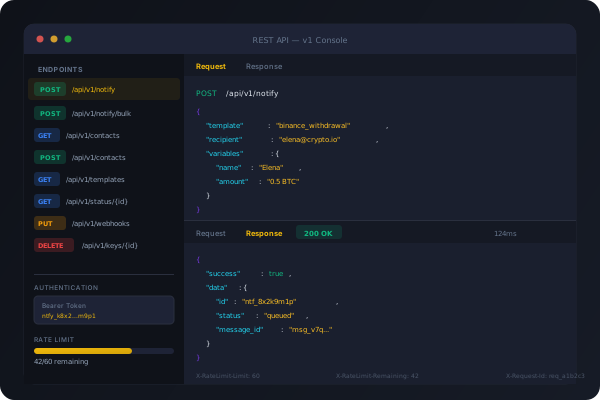
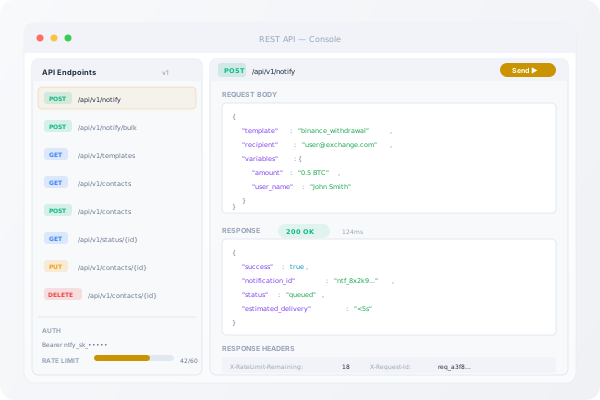
A complete API for notification operations
Every admin panel action is also available via the REST API — dispatch, query, and manage programmatically.
12 Endpoints
Send notifications, manage contacts, query templates, track delivery status, and configure webhooks — all via REST.
Bearer Token Auth
SHA-256 hashed API keys with per-key rate limiting. Create multiple keys with scoped permissions.
Webhook Integration
Configure outbound webhooks via API. HMAC-signed payloads with automatic retry and suspension on failure.
Explore the API documentation
Get your API key and start integrating in minutes.
Key Features
Scoped API Keys
Create multiple API keys with specific permission sets. Revoke individual keys without affecting other integrations.
Rate Limiting
Per-key rate limiting with X-RateLimit headers. Configurable limits prevent abuse without affecting legitimate traffic.
Bulk Dispatch
Send to thousands of recipients in a single API call. Bulk jobs are processed asynchronously with polling-based status tracking.
Request Tracing
Every API request tagged with a unique request ID. Trace notifications from API call through queue to delivery.
JSON Envelope
Consistent response format: success flag, data payload, message, errors array, and pagination meta on all endpoints.
HMAC Webhooks
Outbound webhooks signed with HMAC-SHA256. Verify payload integrity on your end with the shared secret.
Frequently Asked Questions
Default is 60 requests per minute per API key. This is configurable in the platform settings. Rate limit headers (X-RateLimit-Limit, X-RateLimit-Remaining) are included in every response.
Yes. The POST /api/v1/notify/bulk endpoint accepts up to 10,000 recipients per request. The job is processed asynchronously and you can poll for status via the returned job ID.
Include your API key in the Authorization header as a Bearer token: "Authorization: Bearer your-api-key". Keys are managed from the admin panel under API Keys.
You can create a test SMTP profile that routes to a local mail catcher like Mailhog or Mailtrap. Send test notifications through the API without affecting production delivery.
Related Products
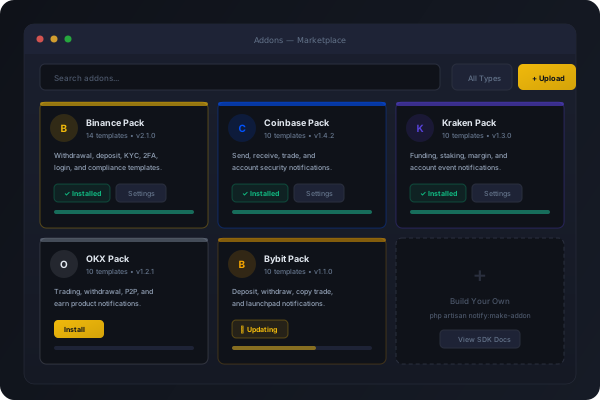
Addon Marketplace
Extend Notify with exchange packs, custom channels, workflow hooks, and third-party integrations. Install, update, and remove addons without touching the core.
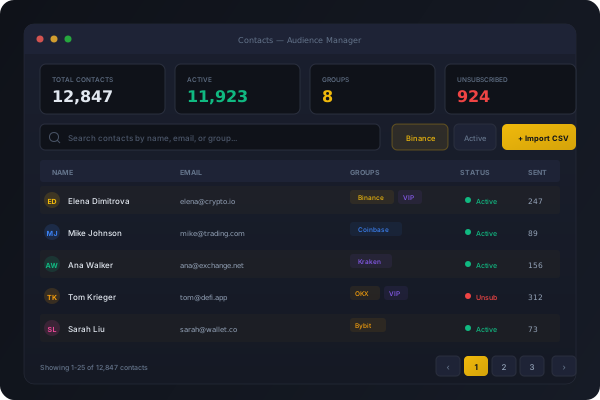
Contact & Audience Manager
Import, segment, and manage your notification recipients. CSV import, group segmentation, suppression lists, and unsubscribe compliance built in.
Exchange Notification Engine
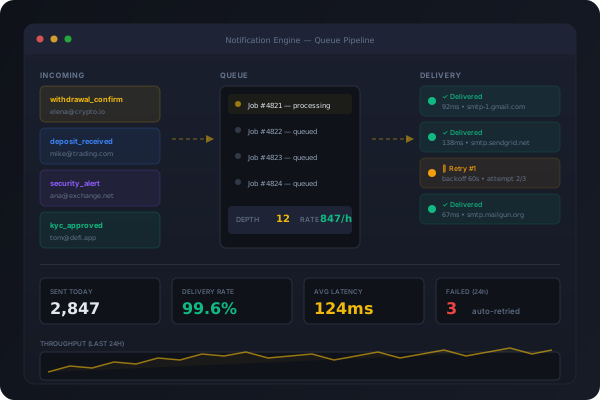
The core of Notify — a high-throughput notification engine built for cryptocurrency exchanges. Queue-backed delivery, automatic retry, and per-notification audit trails.